
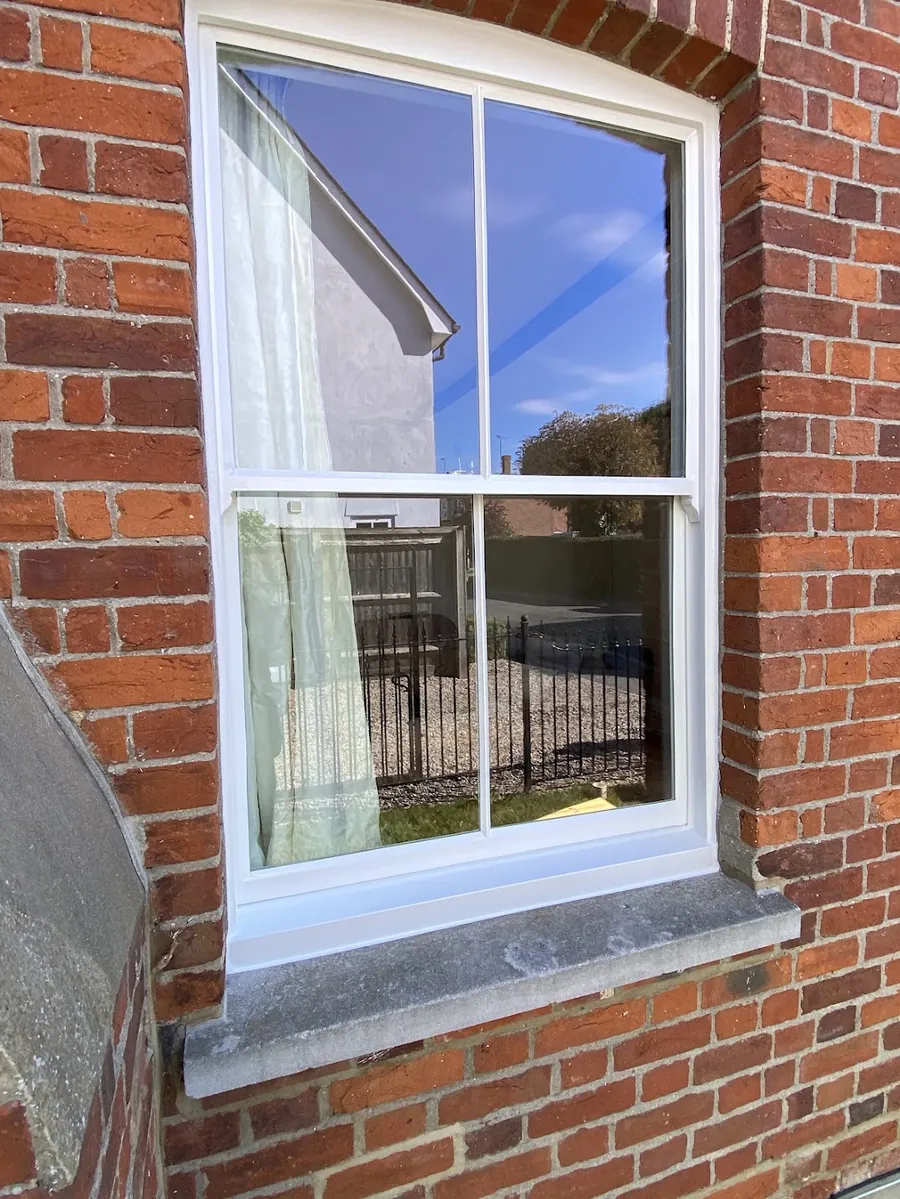
Vacuum insulated glazing is two panes of glass with a near-perfect vacuum sealed between them, held apart by a grid of microscopic pillars. Because heat barely crosses a vacuum, a unit just 6–8 mm thick insulates like triple glazing — in the thickness of a single pane.
That mix of high performance and slim profile is why VIG matters. In the UK its strongest home is period and listed buildings, where owners want modern warmth without tearing out original timber windows — but the same physics is now reaching roof windows, low-energy new builds and curtain walling. This site is independent: we don't sell glazing and aren't tied to any manufacturer. Here's the full picture.
What vacuum insulated glazing actually is
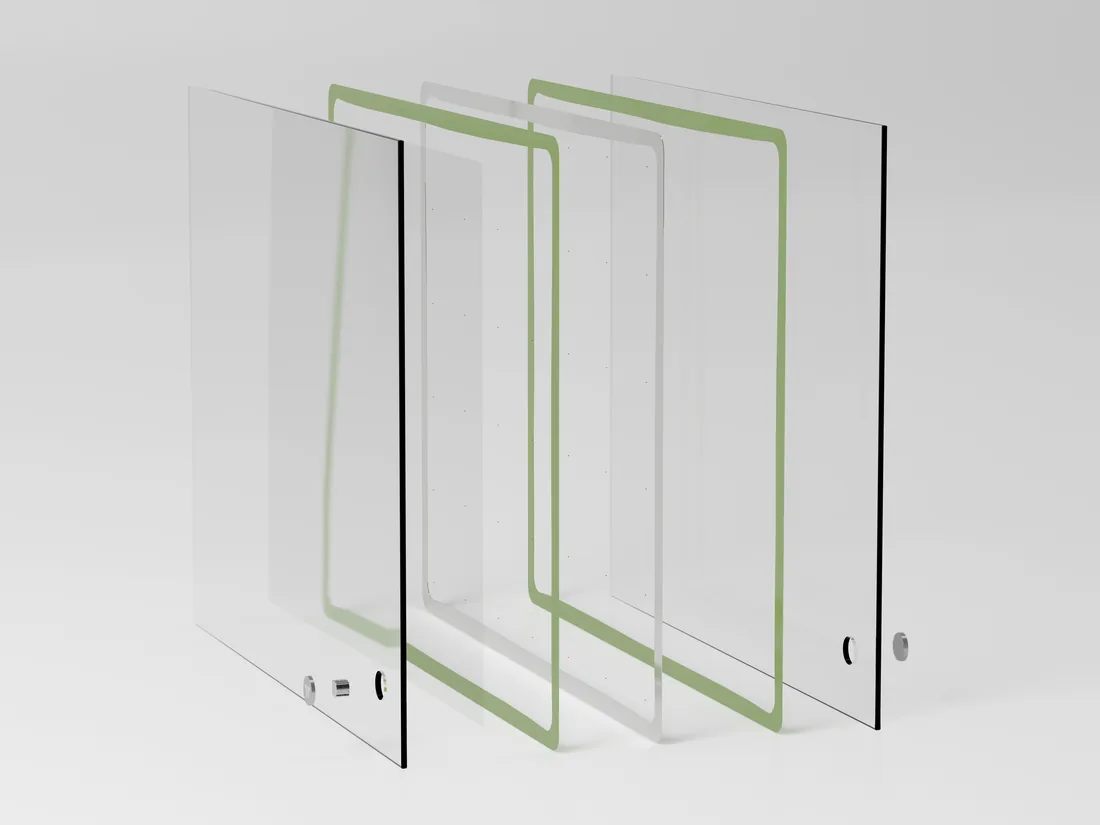
A VIG unit — also called vacuum glass or vacuum double glazing — has four parts: two panes, an array of tiny support pillars, a hermetic edge seal, and the evacuated vacuum gap. A getter and a sealed pump-out port create and hold the vacuum. The result is a sealed unit about 6–8 mm thick that performs like one three or four times deeper.
Two clarifications, because the terms get muddled:
- It's not slim double glazing. Slim (slimline) units still have a thin gas-filled cavity, typically 10–18 mm overall. VIG's gap is a sub-millimetre vacuum — see the comparison below.
- It's not a vacuum insulated panel (VIP). VIPs are opaque insulation boards for walls and fridges. VIG is glazing you see through.
And no — ordinary double glazing has no vacuum. It's filled with air or argon at roughly atmospheric pressure. Only vacuum glazing removes the gas.

How it works: emptying the gap
Heat crosses a glazing cavity three ways: conduction and convection through the gas, and radiation between the glass surfaces. In a good low-E double unit, the gas accounts for about 70% of the heat that gets through. Remove the gas and that 70% goes with it — nothing left to conduct through, nothing to circulate.
The catch is how hard the vacuum has to be. Gas conduction only becomes negligible once the pressure is low enough that the few remaining molecules cross the gap without colliding — around 0.1 Pa, a thousandth of atmospheric pressure. Holding that vacuum inside a sealed glass unit for decades is the central challenge of the whole field. It's also the edge over argon: argon and krypton only slow conduction and convection, and can slowly leak; a vacuum stops both, with no fill to lose.
With the gas gone, radiation becomes the main remaining heat path, so a low-emissivity (low-E) coating reflects infrared heat back to its source. Uncoated glass has an emissivity near 0.84; a good soft-coat drops it to about 0.03. That leaves just two paths: the coating's residual radiation, and conduction through the pillars.
The pillars exist because atmospheric pressure squeezes the panes together at about 10 tonnes per square metre. Without support they'd clamp shut. So the cavity carries an array of tiny pillars — roughly 0.3–0.5 mm across, a tenth to a fifth of a millimetre tall, on a ~20 mm grid (about 2,600 per m²; tempered units use a far sparser array). Each is a small thermal bridge, which is why pillar count and material matter — more in our guide to support pillars and edge seals.
What it is made of
Familiar materials, used in unfamiliar ways. (For a part-by-part tour of the whole unit — panes, coating, pillars, seal and getter — see the six components of a vacuum glazing unit.)
The glass
Ordinary soda-lime float glass, or low-iron glass for extra clarity. What matters is annealed versus toughened: early VIG had to use annealed glass because the sealing ran too hot to keep any toughening. Low-temperature sealing changed that, which is what makes today's tempered safety-rated vacuum glass possible.
The low-E coating
Once the vacuum removes conduction and convection, the low-E coating does the rest of the work — reflecting infrared heat back into the room. It's also where most of your real choices lie:
Almost all vacuum glass uses a soft-coat (magnetron-sputtered silver) low-E — the lowest emissivity available, around 0.02–0.04. Soft coats are delicate, but that's no problem here: sealed inside the vacuum, they're perfectly protected. Hard-coat (pyrolytic) coatings are tougher but far less effective (~0.15–0.2 emissivity), so they're rarely the first choice for VIG.
A clear (neutral) low-E maximises daylight and free winter heat — a typical clear unit passes ~78–80% of light with a solar factor (g-value) near 0.67. A solar-control low-E instead trims summer heat gain (g-value nearer 0.5), which suits large south- or west-facing windows prone to overheating, at a small cost in light. Pilkington Spacia Cool and AGC Fineo's solar-control build are examples.
Standard units carry a single low-E coating on one cavity-facing surface. Adding a second coating on the opposing pane lowers the combined emittance further (toward ~0.015) and pushes the U-value down — the route used in the highest-performing and hybrid units. More coatings means a little less light, so it's a performance-versus-daylight trade-off.
The pillars and the seal
Pillars are a high-strength material — usually stainless steel or a ceramic (some are made transparent). The edge seal comes in two families that shape everything about durability. A rigid glass-frit seal is fired at ~350–450 °C: strong and fully inorganic, but brittle, and the heat de-tempers the glass. A flexible metal or indium seal is bonded near 250 °C, keeping the glass tempered and flexing as the panes expand. A small getter inside absorbs stray gas over the years to hold the vacuum.
Which seal a product uses shapes both its durability and its appearance — here's who uses what:
| Product | Edge seal |
|---|---|
| Pilkington Spacia | Rigid glass-frit (solder glass) · visible pump-out port |
| AGC Fineo | Proprietary low-temperature seal · no visible port |
| LandVac | Low-temperature seal · keeps the glass fully tempered |
| PassivGlas (UK) | Toughened safety glass as standard |
| HaanGlas (PRO) | Low-temperature metal edge seal · no visible port |
| LEADUS | Low-temperature seal · fully tempered |
| V-Glass (pre-commercial) | Metal, ultrasonic-welded |
As a rule, the rigid glass-frit route (Spacia) is proven but more sensitive to thermal stress, while the low-temperature seals (Fineo, LandVac, Panasonic) keep the glass tempered and flex a little as the panes expand.
What a vacuum unit actually looks like
Vacuum glass has a few visible traits ordinary double glazing doesn't. None are faults — but it helps to expect them.
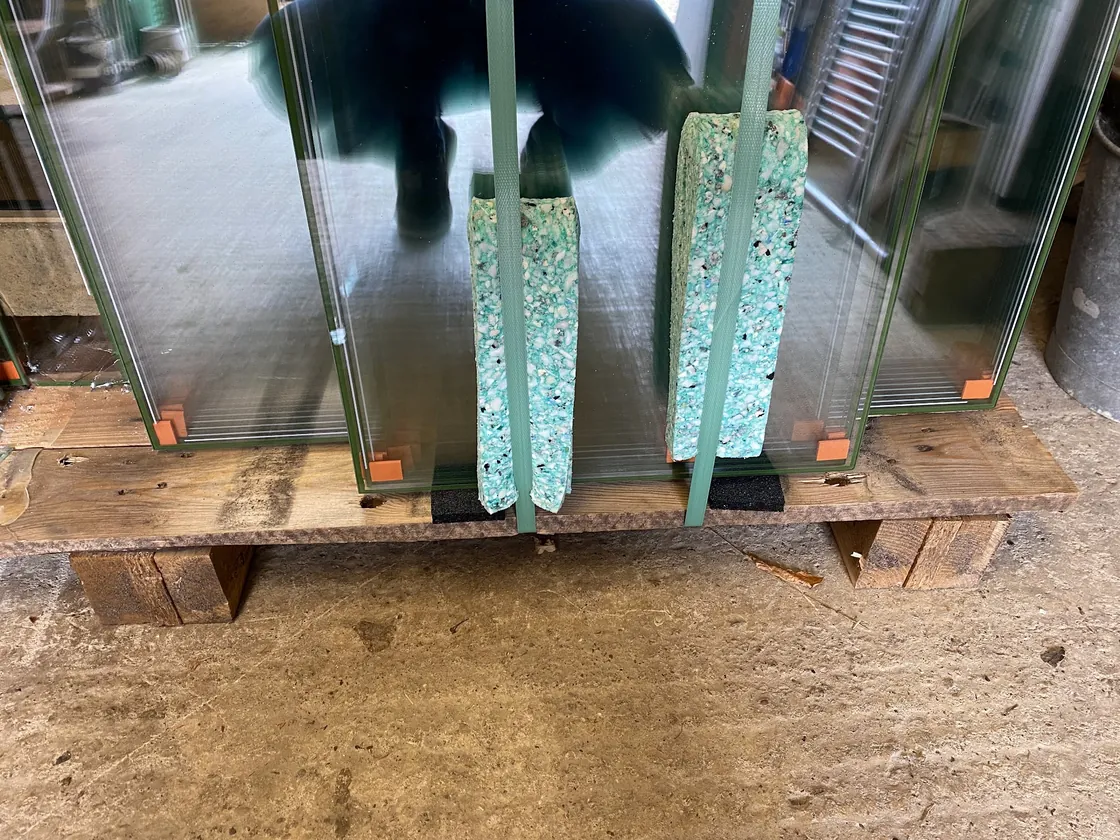
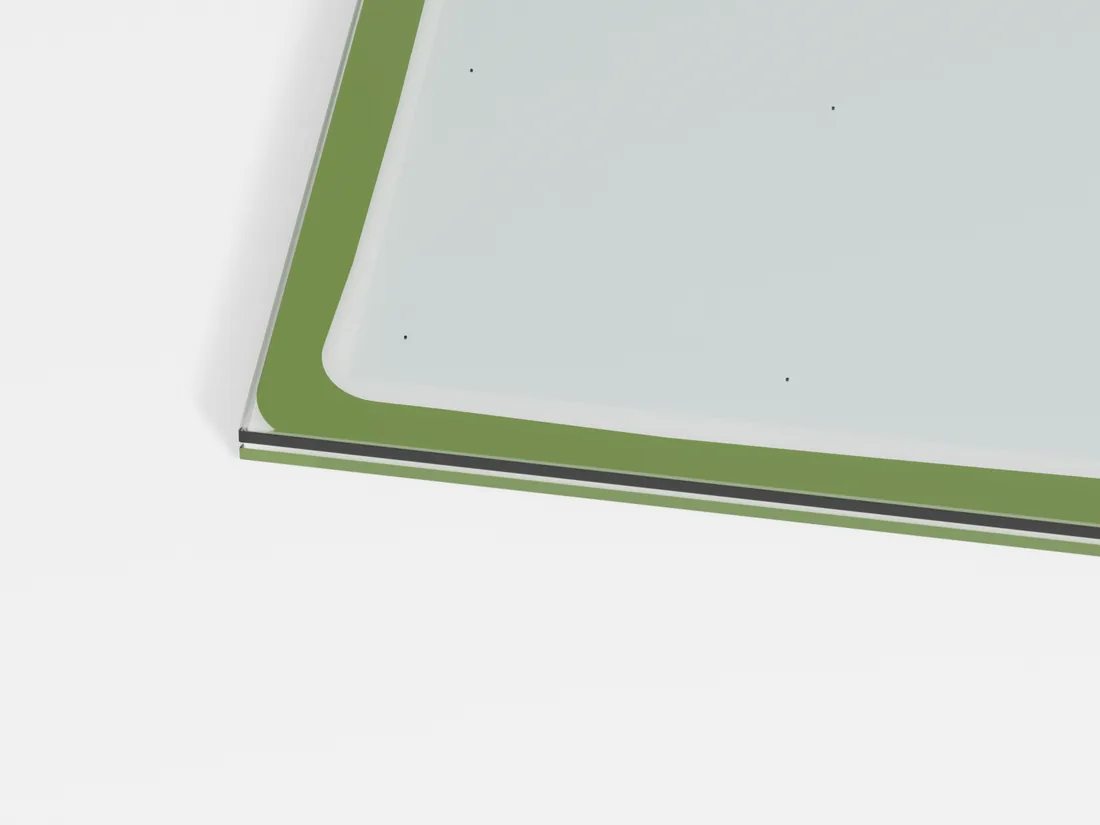
- The pillar grid. In the right light, up close, you can make out a very fine dot pattern. At normal distance it vanishes; tempered units with a sparse array (LandVac) hide it best.
- The pump-out port. On many units the air was drawn out through a small tube, leaving a sealed "dot" in one corner (Spacia, and some LandVac builds). Increasingly, though, brands have moved it or done away with the visible corner port entirely — AGC Fineo has no visible port at all, just a faint double reflection and a small etched mark.
- Optical effects. Like other coated and toughened glass, VIG can show gentle anisotropy and occasional interference rings. In a period property that soft irregularity can read a little like old hand-drawn glass.
These renders show the make-up from the edge — two panes with the sealed perimeter between them and the faint pillar dots on the glass — and a short animation of a unit coming together:
At arm's length it looks like a crisp single pane; only up close, in the right light, does it show its workings. Conservation officers tend to welcome it precisely because it looks nothing like bulky modern double glazing.
The performance numbers
Insulation is a U-value in W/m²K — lower is better. Measured at the centre of the glass:
| Glazing type | Centre-of-glass U-value | Typical thickness |
|---|---|---|
| Single glazing | 5.7 | ~6 mm |
| Old air-filled double glazing | ~2.8 | ~20 mm |
| Modern low-E argon double glazing | ~1.2–1.6 | 24–28 mm |
| Triple glazing | ~0.6–0.8 | 36–44 mm |
| VIG — Pilkington Spacia (frit-sealed) | 1.1 | ~6.2 mm |
| VIG — HaanGlas (tempered) | 0.47–0.5 | 6.3 mm+ |
| VIG — AGC Fineo | 0.7 | 7.7 mm |
| VIG — LandVac (tempered) | 0.4–0.48 | 8.3 mm |
| VIG — PassivGlas (UK, tempered) | 0.44 | 6.15 mm+ |
Two things stand out. First, the original frit-sealed Spacia is about 1.1 W/m²K — as good as modern double glazing, but in single-glazing thickness. It's a common error to credit Spacia with 0.4; that belongs to newer tempered glass (LandVac) and hybrid units. Second, the point is the right-hand column: VIG delivers those figures in a quarter of the thickness.
One caveat on the number you'll be quoted: these are centre-of-glass (Ug) values, which flatter slightly. The whole-window (Uw) figure — including frame and edge — is a little higher and is the one Building Regulations use. Our U-values explainer untangles the two.
Sound behaves like heat: it struggles to cross a vacuum, so VIG cuts noise better than a single pane of the same thickness — around 35 dB standard, up to ~39 dB laminated or tempered. Light transmission is high (~78–80%), and the solar factor (g-value) is around 0.67 with solar-control options. A subtler win: with no gas in the gap, the U-value doesn't change with mounting angle — gas units lose performance near-horizontal, which is why vacuum glass suits roof windows.
Condensation, inside and out
On the inside, VIG strongly resists misting: the vacuum keeps the indoor pane near room temperature, so it rarely drops below the dew point.
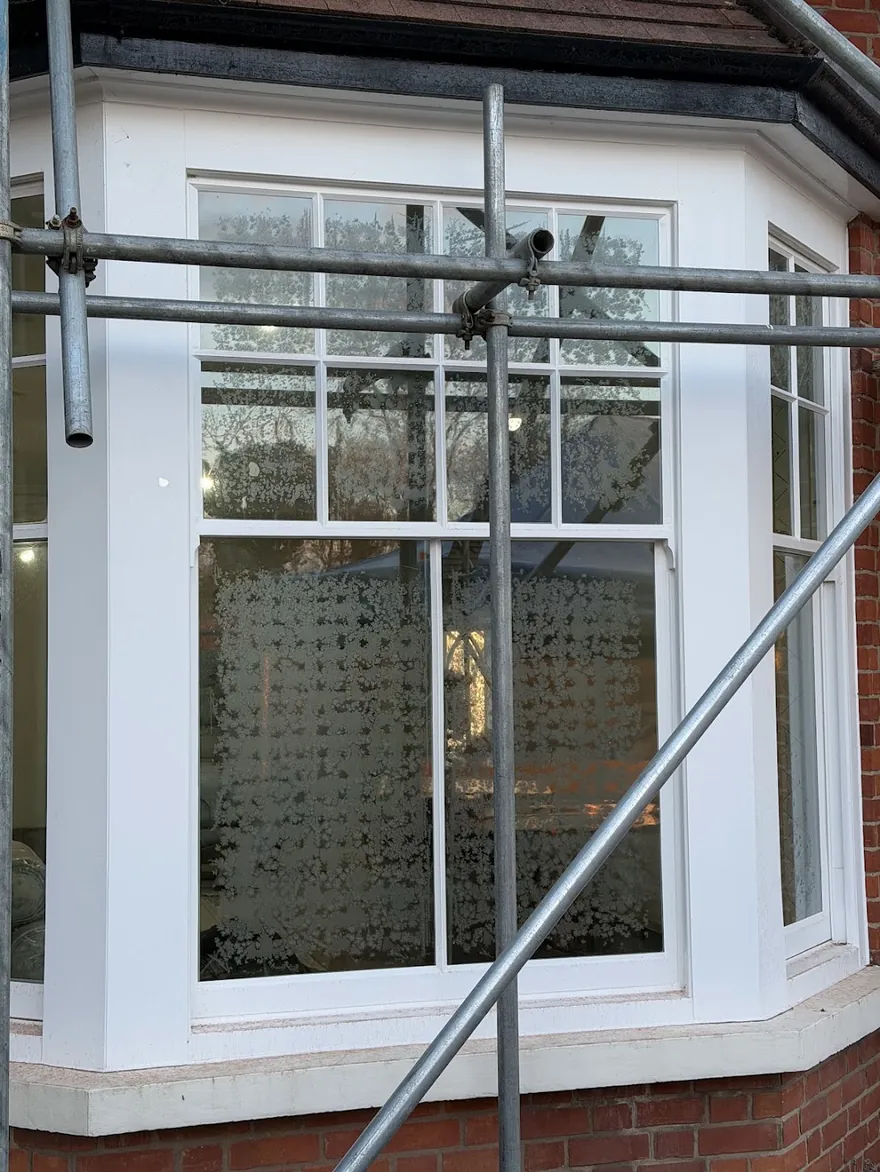
On the outside, something counter-intuitive can happen — and it's a good sign. Because so little heat leaks out, the outer pane stays cold and, on a clear humid morning, can pick up dew like a car windscreen. It appears in patches, clearing first from the edges and over the pillars (the slightly warmer spots) before burning off. If you see it, the glazing is working: heat that once kept the outer pane clear is now staying in your home. More in our guide on condensation and real-world performance.
How vacuum glazing compares
Vs ordinary double glazing
Even first-generation VIG matches good modern double glazing, and tempered VIG clearly beats it — ~0.4 against 1.2–1.6. The decider is thickness and weight: 6–8 mm versus 24–28 mm, so VIG fits slim heritage frames where double glazing can't, and resists condensation and noise better. The trade-off is price. If slimness doesn't matter, double glazing is usually cheaper. Full head-to-head: vacuum glazing vs double glazing.
Vs triple glazing
Closer on the numbers — the best tempered and hybrid VIG reaches ~0.4, matching or beating triple's 0.6–0.8 — but VIG wins on thickness, weight and orientation. Triple glazing is usually cheaper per m² and more available. So it comes down to whether you need the slim profile: heritage frames and large openings favour VIG; standard new windows often favour triple on price.
Vs slim (slimline) double glazing
The comparison people most often confuse — and slim double glazing is a genuinely different product. It shrinks a conventional gas cavity to ~10–18 mm (the slimmest near a 4 mm gap): cheaper than VIG and fits some historic frames, but it can't reach a single pane's thinness, the narrowest gaps limit performance and cavity life, and it isn't always accepted in the tightest conservation settings. VIG goes thinner (~6 mm total), holds a better U-value, and has no gas to leak — at a higher price. Deep enough frame and consent allows it: slim can be the value option. Shallow frame or exacting standard: VIG fits.
Vs secondary glazing
Secondary glazing — a discreet inner pane — is the reversible, lower-cost heritage default, and for the most sensitive windows (historic glass, leaded lights) it's often right because it changes nothing original. VIG replaces the glass in the sash for a better result and no second frame, but it's more permanent and costs more. Many projects use secondary glazing where the original glass must stay, and VIG where it can be swapped.
A short history
Patents for evacuated glazing date to the early twentieth century, but for decades nobody could make it hold a vacuum. The breakthrough came at the University of Sydney: Professor Richard Collins began research in 1987, and in 1989 he and student Stephen Robinson made the first working samples — cylindrical pillars, glass-frit seal, the template every unit still follows.
NSG licensed it in 1994 and launched Pilkington Spacia in Japan in October 1997 — the world's first commercial vacuum glazing. Then came tempered VIG: China's LandGlass brought LandVac to market in 2016 with a low-temperature seal that keeps the glass toughened. AGC Fineo followed in 2019 (co-developed with Panasonic, no visible port), and Guardian Glass and VELUX partnered in 2024, bringing VIG to VELUX Heritage roof windows in the UK and Ireland in 2026. The full timeline and research papers are on our science page.
Who makes it
The vacuum glass a UK buyer meets comes from a handful of makers — the three most people choose between are compared in Spacia vs Fineo vs LandVac.
- Pilkington Spacia (NSG, Japan) — the original. Glass-frit seal, visible port, ~1.1 W/m²K; first-generation, not toughened as standard.
- AGC Fineo (Belgium) — Europe's flagship, ~0.7 W/m²K at 7.7 mm, no visible port. Made by AGC at Lodelinsart (co-developed with Panasonic); first VIG with a CE mark and environmental product declaration; hybrid version ~0.4–0.5. UK distribution via Energlaze.
- LandVac (LandGlass, China) — fully tempered safety glass down to 0.4–0.48 W/m²K at 8.3 mm, made in Luoyang, with a sparse pillar array. Sold here through specialist fabricators; minimum sizes start a few hundred mm a side.
- PassivGlas (UK) — a British brand of toughened vacuum units (Linear, Ultimate and a ReGlaze retrofit line) from 6.15 mm, with U-values as low as 0.44 W/m²K, up to Rw 41 dB acoustic (UKAS-tested) and a 15-year warranty.
- HaanGlas (China) — tempered vacuum glass at ~0.47–0.5 W/m²K from 6.3 mm; its "PRO" line uses a low-temperature metal edge seal with no visible port.
- LEADUS (China) — fully tempered VIG, hybrid units and vacuum photovoltaic glass; one of the few makers of both the glass and the machines that produce it.
- Guardian + VELUX — tempered VIG in VELUX Heritage roof windows from 2026 (whole-window Uw 1.0, or 0.83 hybrid).
- V-Glass (USA) — pre-commercial, pursuing a room-temperature metal-welded seal to cut cost.
Two names that aren't vacuum glazing: Xinyi and Taiwan Glass supply raw float glass to VIG makers but don't make units, and Saint-Gobain's SageGlass is electrochromic "smart tint," not vacuum glass.
China's growing role
China is now the largest vacuum-glass manufacturing base, and increasingly a centre of its development. It was a Chinese maker, LandGlass, that brought fully tempered VIG to market in 2016, and the country's big glass expos are where a lot of the newest ideas appear first — large-format and curtain-wall units, and experiments like "vacuum photovoltaic glass" that builds a solar-generating layer into the sealed unit.
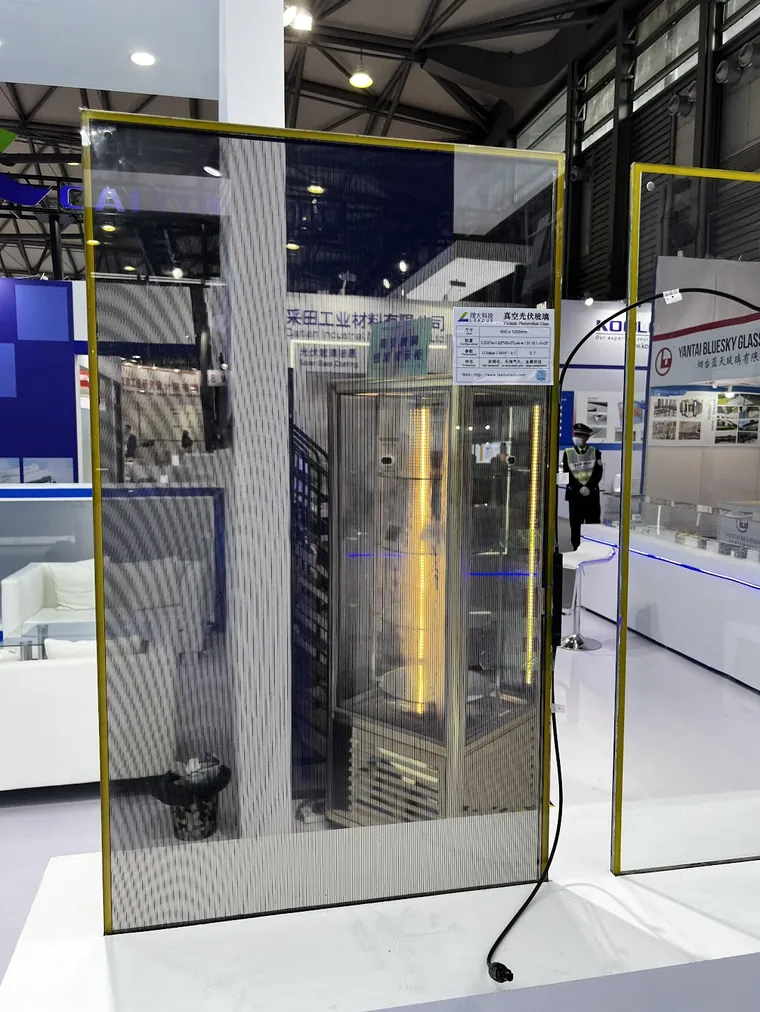
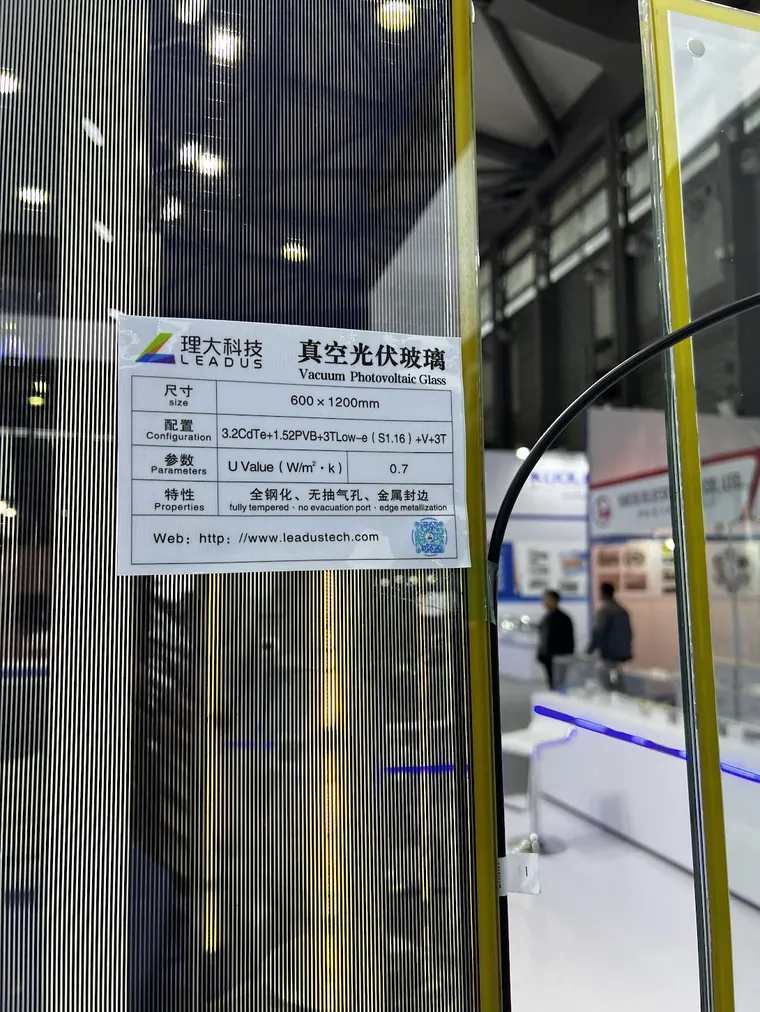
At China's glass expos: large-format vacuum panels (left) alongside newer ideas such as vacuum photovoltaic glass, which integrates a solar layer into the unit (right).
Where it is used
The dominant UK use is heritage retrofit: the slim unit drops into frames cut for single glazing, so owners keep and restore the original windows. It's fitted by heritage sash window specialists, not high-street glaziers — re-rebating a period sash is skilled joinery, not a DIY swap (see vacuum glazing for sash windows).
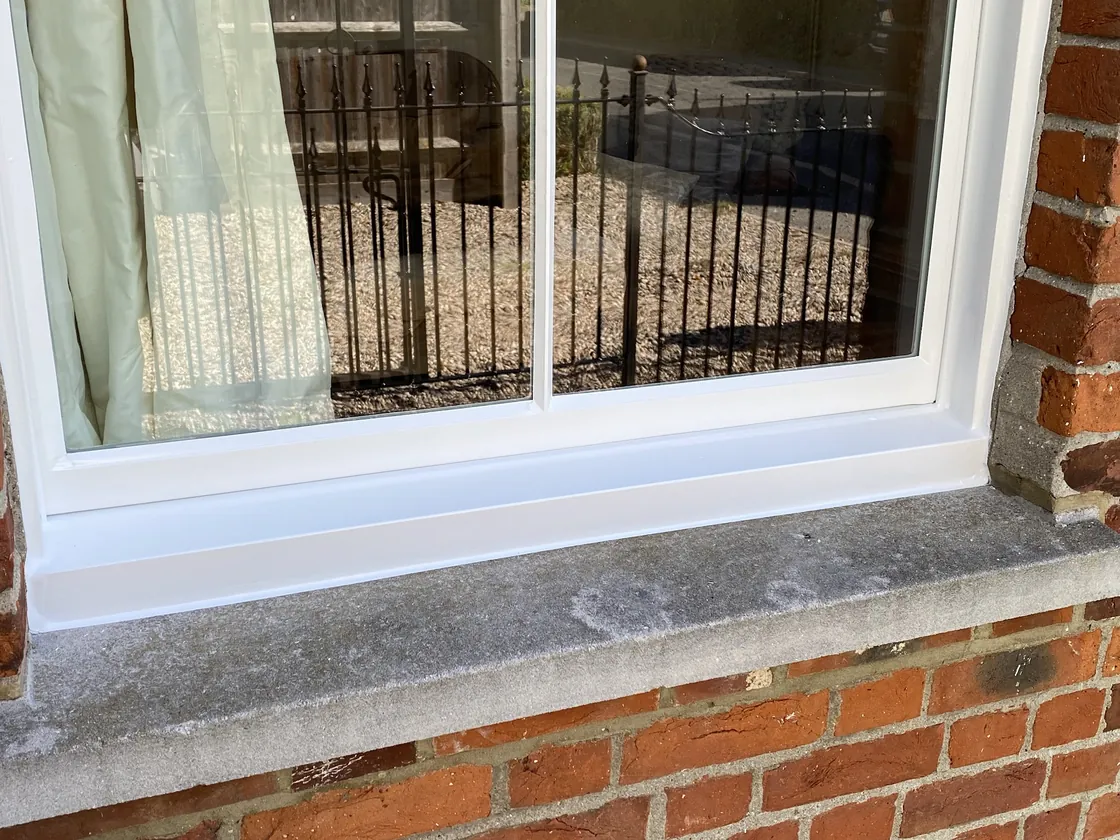
Beyond heritage: slim contemporary sightlines, Passivhaus and low-energy new build, and large-format curtain walling. It's a natural fit for roof windows and rooflights, because its performance doesn't fall off when the glass is near-horizontal — the situation where gas-filled units struggle, and a reason VELUX chose it. Its lineage even runs back to refrigerated display cabinets.
Regulations, heritage and the 25% rule
Two regimes matter, and they're separate. Building Regulations: in England, Approved Document L requires a replacement window in an existing home to reach a U-value no worse than 1.4 W/m²K, or a Window Energy Rating of Band B — which vacuum glazing clears comfortably (new-build windows face a tighter 1.2). People also ask about the "25% glazing rule": for an extension or similar new work, Approved Document L broadly limits total window, door and rooflight area to about 25% of the new floor area (plus any openings removed), unless you compensate elsewhere through an energy calculation. It's an area limit on new work with trade-off routes — not an outright cap, and not something that applies to a like-for-like glass swap; check the current document for exact wording.
On product standards, conventional units follow EN 1279, which excludes vacuum glass; VIG has its own standard, ISO 19916 (Part 1, 2018; Part 3, 2021). So a vacuum unit can't be "EN 1279 certified" — that's the wrong standard, not a shortcoming.
Heritage consent: altering windows in a listed building normally needs Listed Building Consent, and conservation-area rules may apply too. Historic England's guidance says slim and vacuum glazing can often be acceptable where the existing glass isn't of historic interest and the frames are substantial enough — and unlikely where there's historic glass worth keeping, leaded lights, or glazing bars too slender to carry the unit. Crucially, Historic England issues guidance, not product "approval," and every case is at the conservation officer's discretion. More in vacuum glazing for listed buildings.
What it costs, and how long it takes
Vacuum glass carries a real premium — as a rough rule, two to four times standard double glazing at the glass level, though the gap narrows against triple glazing and against replacing the whole window. Any per-square-metre figure (ours included) is an indicative estimate, not a quote: cost depends on size, product, toughened or hybrid, and — often the biggest part on a heritage job — the joinery and fitting, which can exceed the price of the glass.
Lead times: Fineo ~4–8 weeks, LandVac ~10–16 weeks (shipped from China), Spacia ~16 weeks. Before committing, settle whether you need toughened safety glass (which points to a tempered or laminated product), get more than one quote with glass, joinery and fitting itemised separately, check who stands behind the warranty, and — on a listed or conservation property — confirm the product suits your conservation officer before ordering. The installer matters as much as the glass: an experienced sash joiner gets a crisp, near-invisible result. Our cost guide and is it worth it? go further.
How long it lasts, and what happens if it fails
Makers quote design lives and warranties of about 10–25 years, with some marketing claims of 60+. A fair expectation is roughly 10–25 years depending on quality and conditions. The physics is favourable — the seal and cavity are inorganic, with no organic sealant to break down, and a getter absorbs stray gas — but commercial VIG is still young, so very-long-life claims are projections, not proven track records. Weigh the warranty (typically 10–20 years) as the promise the maker will actually stand behind.
If a unit loses its vacuum — usually through seal fatigue or thermal-stress cracking — the panes can bow and it may mist internally as its insulation drops toward single-glazing levels. There's nothing to re-gas: a failed unit is replaced, not repaired. That's a reason to favour a solid warranty and a flexible-sealed, tempered product, which handles thermal stress better than a rigid frit-sealed one.
Sustainability and embodied energy
The environmental story is reasonable: units are recyclable, use far less material than a triple-glazed unit of similar performance, and have no gas to leak. The strongest independent evidence is Historic Environment Scotland's Technical Paper 9 (with Heriot-Watt), which looked at thermal performance and embodied energy of slim glazing for historic windows and found the best thermal result was the window fitted with vacuum double glazing. And keeping original timber windows, rather than making and fitting whole replacements, avoids a large chunk of embodied carbon in the first place.
Myths and misconceptions
- "Spacia is 0.4 W/m²K." No — classic Spacia is ~1.1. The 0.4 figure is tempered (LandVac) and hybrid glass.
- "It's approved by Historic England." Historic England issues guidance, not product approvals. Your conservation officer decides, case by case.
- "It's fragile." First-gen Spacia is annealed, but tempered products (LandVac, HaanGlas and others) are full safety glass, and units can be laminated.
- "Double glazing already has a vacuum." It doesn't — it's air- or argon-filled at roughly atmospheric pressure.
- "The edge seal ruins performance." There's a real but modest "edge effect," already reflected in whole-window U-values.
The benefits — and the honest trade-offs
The case is strong where its strengths fit: triple-glazing warmth and good acoustics in single-glazing thickness, excellent condensation resistance, low weight, orientation-independent performance, and — the reason it dominates heritage work — keeping frames and sightlines thicker units can't fit.
It isn't a free lunch: it costs more, lead times can be long, you can spot a faint pillar grid and (on some products) a small port up close, warranties are shorter than the lifespans makers claim, and rigid frit-sealed units are more thermal-stress-sensitive than flexible-sealed tempered ones. For most buyers it's chosen for conservation, comfort and appearance rather than a fast bill payback — and on those terms it's a remarkable piece of engineering. Weighing it up? Is vacuum glazing worth it?
Frequently asked questions
Does double glazing have a vacuum?
No. A standard double-glazed unit is filled with air or argon at roughly atmospheric pressure. Only vacuum insulated glazing removes the gas to create a vacuum between the panes.
Is vacuum glazing worth it?
For period and listed homes where you want to keep the original windows, and for slim sightlines or roof windows, it's often the best way to get triple-glazing warmth. For a standard modern window, ordinary double or triple glazing is usually cheaper. See our worth-it guide.
How long does vacuum glazing last?
Realistically around 10–25 years depending on quality and conditions, with warranties typically 10–20 years. Longer "60-year" figures are manufacturer projections. If the vacuum fails, the unit is replaced rather than repaired.
Is vacuum glazing better than double glazing?
On insulation, even first-generation vacuum glass matches good modern double glazing and tempered vacuum glass beats it — in a quarter of the thickness, with better condensation and noise resistance. Double glazing is cheaper where slimness isn't needed.
How much does Fineo (or vacuum) glass cost?
Indicatively, vacuum glass runs around two to four times standard double glazing at the glass level, and heritage fitting can cost more than the glass. Prices vary by size, product and installer — always get written quotes. More in our cost guide.
Where is Fineo and LandVac glass made?
Fineo is made by AGC Glass Europe in Belgium; in the UK it's distributed by Energlaze. LandVac is made by LandGlass in Luoyang, China, and supplied here through specialist fabricators.
Is vacuum glazing the same as slim double glazing?
No. Slim (slimline) double glazing has a thin gas-filled cavity, typically 10–18 mm overall. Vacuum glazing replaces the gas with a vacuum and is far thinner (about 6–8 mm total), with a better U-value and no gas to leak.
Can I clean and maintain it normally?
Yes — clean it like any glass with ordinary glass cleaner and a soft cloth. There's no gas to top up and no routine maintenance; just avoid abrasives and don't pick at the pump-out port on units that have one.
Ready to go deeper? Browse the full set of articles, check the science and standards, or see the frequently asked questions.